Old-growth forests in British Columbia hold a prized position in our collective imagination. Our relationships with these places define our regional identity.
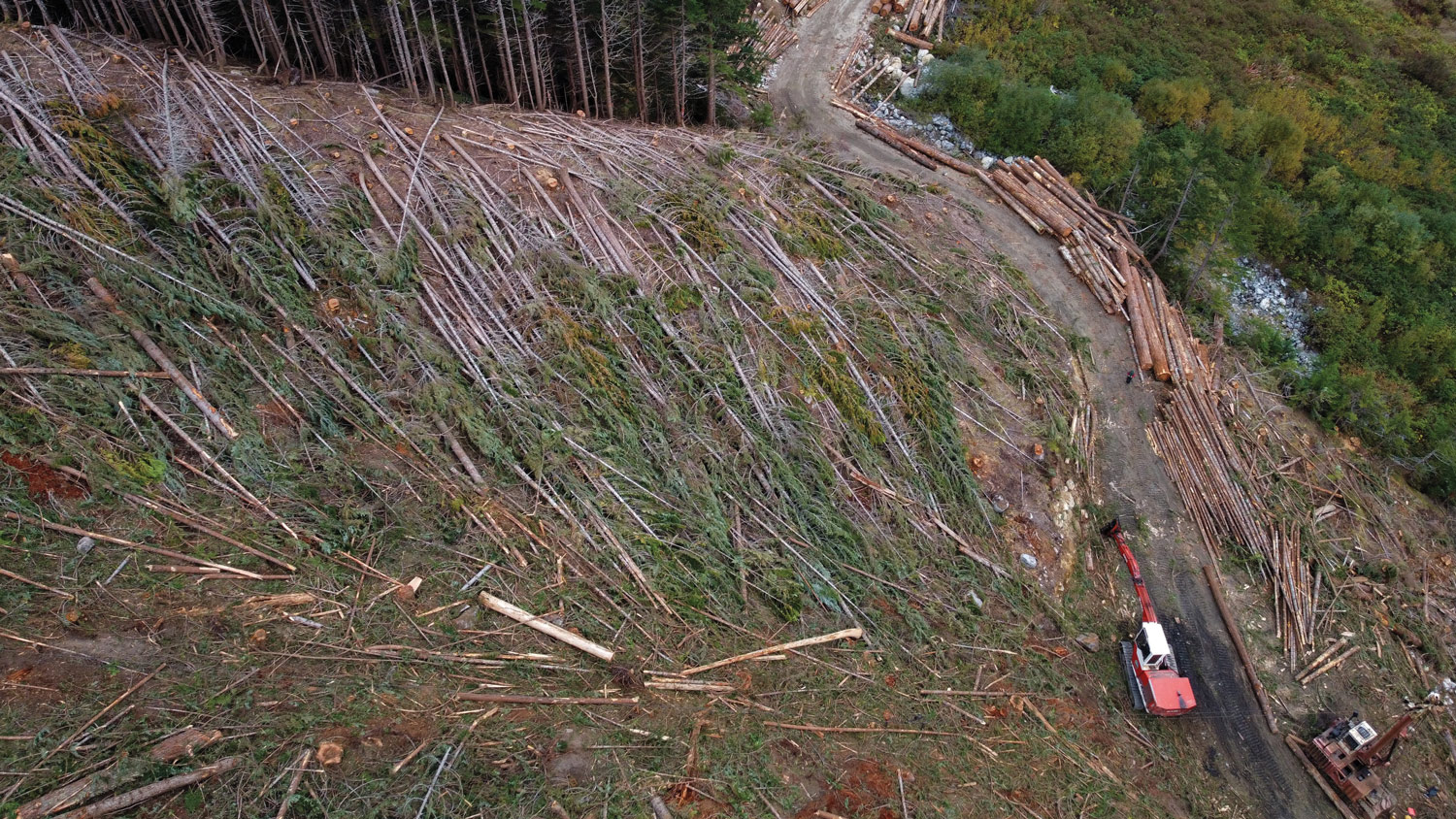
We often picture them as valleys of towering cedar and Douglas fir with sunshine filtering down through diverse canopies, and salal and huckleberry stretching up to the light. But old growth also includes high-elevation forests of slow-growing subalpine fir and mountain hemlock, rooted to the sides of cliffs, weathering avalanches and wind, and old northern stands of unassuming boreal white and black spruce that have supported lichen and caribou for centuries. In rainforests, old growth is defined as stands averaging 250 years or older. In drier forests, the threshold is 140 years. These are all complex, ancient ecosystems that do not regenerate on human timelines. But they are still being logged.
Ecosystem distinctions matter because industrial forestry has focused on high-productivity valley-bottom forests with the biggest trees, richest soils, highest biodiversity, and greatest carbon storage.