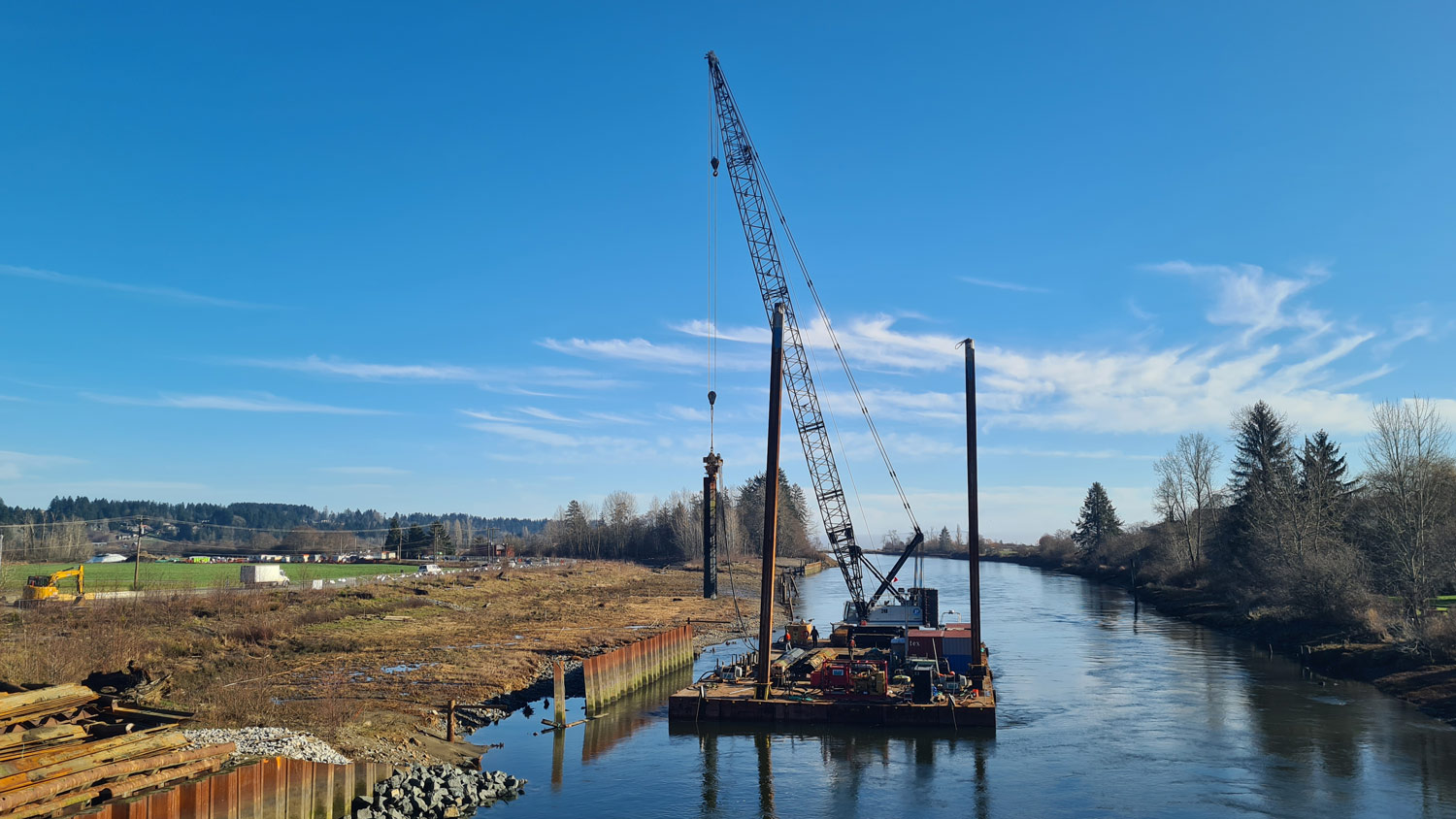
In winter 2025, a barge carrying a crane moved slowly into the Courtenay River estuary to remove the last remains of the old sawmill. For weeks, 20-metre-long rusty steel pilings were wrenched from the mud one by one, marking the end of a 400-metre retaining wall that had kept the land apart from the water for 70 years.
The barrier is emblematic of a common coastal engineering practice known as “hard armouring,” where rigid, permanent structures are built to protect shoreline properties and infrastructure from erosion, waves, and flooding. This corrugated metal “killing wall” – built to support a sawmill that operated from 1947 to 2006 – trapped juvenile salmon, leaving them exposed to hungry seals. The rush to make usable land destroyed many acres of prime habitat. Thousands of years of cultural-use history, including parts of an ancient wood stake fish trap fishery, were buried.
The restoration project started in fall 2017, when Project Watershed began fundraising and working with the K’ómoks First Nation and the City of Courtenay to purchase the old mill site from then-owner Interfor. K’ómoks First Nation named the site Kus-kus-sum, meaning “very slippery,” to honour a nearby village of that name that existed before colonization.
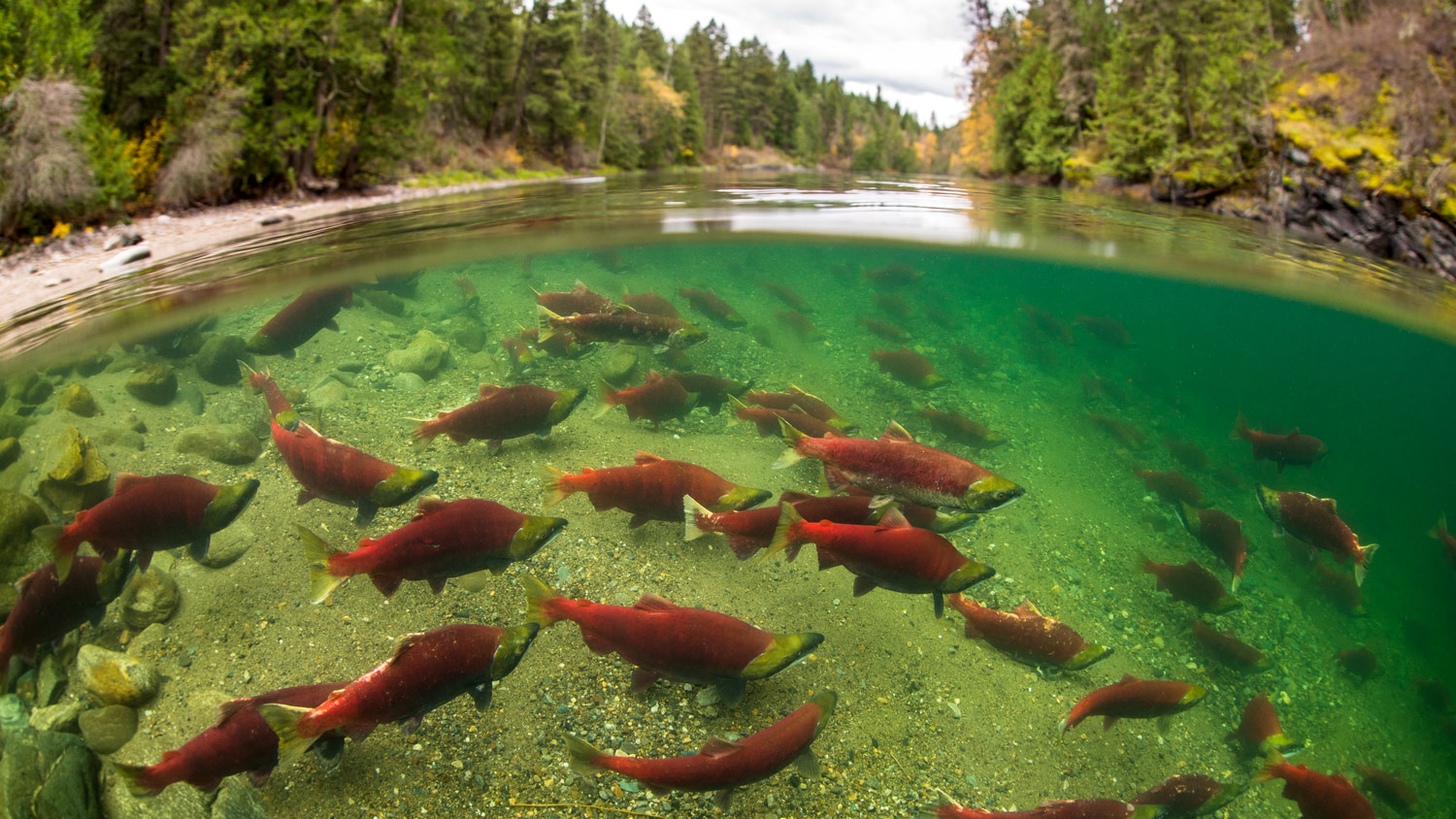
By March 2021, the site was secured and demolition and restoration work began. Since then, volunteers have spent thousands of hours in the mud, restoring salt marsh habitat for dozens of species of fish, birds, and plants. Salmon were already spotted spawning in the new lagoons while demolition was underway. Even in its degraded state, the estuary supports important populations of great blue herons, Canada geese, loons, sandpipers, bald eagles, and trumpeter swans.